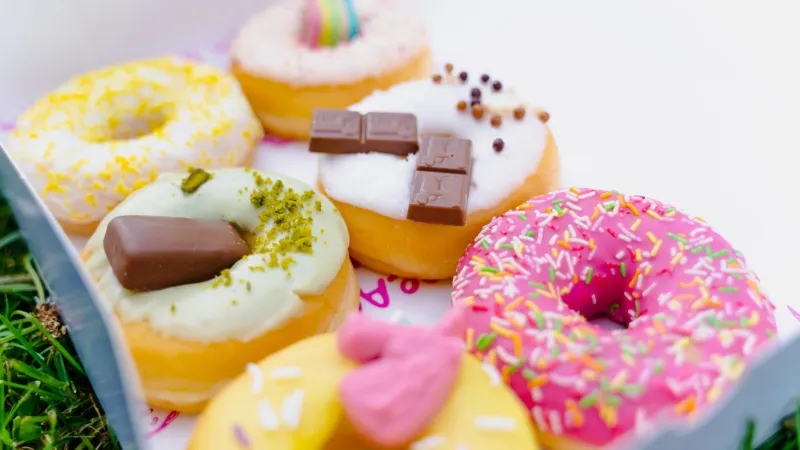
The BOGOF Illusion: Britain's Black Friday Doughnut Deals, Audited by a Cynic With a Calculator
Photo: Internet Archive Book Images, No restrictions, via Wikimedia Commons
Black Friday lands on 27 November 2026, and Britain's doughnut-industrial complex has already begun its annual ritual of pretending that a multi-pack is a human right. My inbox is a swamp of countdown timers, app-only bundles and phrases like 'sprinkle drop' that make my left eye twitch. The promise is always the same: huge savings, limited time, don't miss out. The reality, more often than not, is a box of doughnuts wearing a promotional hat and hoping you won't notice the price tag underneath.
So I did what any sensible person with a sugar habit and a lingering grudge against marketing departments would do. I opened a spreadsheet, made a cup of tea, and audited the maths. Here is what I found.
The unit price is the first casualty
Let's start with the classic. A major glazed-ring chain is pushing a 'two boxes for £15' deal on its six-packs. The single box normally retails at £8.50. On the surface, £15 for two boxes feels like a win — and it is, technically. You save £2 across twelve doughnuts. That works out at roughly 17p per doughnut. Congratulations: you have saved enough to buy a Freddo, assuming your memory of Freddo prices is still stuck in 2012.
The problem is the framing. The promotional email screams 'save £2' in a font usually reserved for nuclear warnings, but the implied saving feels closer to 50%. It isn't. You are still paying £1.25 per doughnut for something that cost £1.42 per doughnut yesterday. That is a real saving, but it is not the earth-shattering bargain the banner advert wants you to believe. And if you only wanted six doughnuts, you have just spent £15 to save £2 on a product you didn't need. That is not a deal. That is a maths test with sprinkles.
Delivery is the glaze on the invoice
App-only bundles are where the arithmetic gets genuinely spicy. One chain is offering a 'Black Friday dozen' for £12, available exclusively through its app. Lovely. Except delivery is £3.99, there's a service fee of £1.50, a small-order fee of £1 because apparently £12 is now small, and the app gently suggests a £2 tip for the driver. Total: £20.49 for twelve doughnuts.
The same dozen from the counter costs £12. You have paid £8.49 for the privilege of not putting on shoes. The deal has not saved you money; it has monetised your reluctance to leave the house. And before anyone emails me to say 'but convenience has value' — yes, it does. It has exactly £8.49 of value, apparently, which is more than the doughnuts.
The limited-edition sprinkle drop
Then there's the 'drop'. A limited-edition sprinkle doughnut, available from 10am, sold out by 10:01, bundled with a branded tote bag and a flavour you didn't choose. Scarcity is a condiment, and Britain's doughnut chains have learned to sprinkle it liberally. The drop isn't designed to save you money; it's designed to make you panic-buy a box of twelve when you wanted one.
I have nothing against a limited edition. I have something against a limited edition that arrives with a minimum spend, a delivery fee and a countdown timer that makes me feel like I'm bidding on eBay at 3am. If the deal requires an app, a code, a minimum spend and a prayer, it's not a deal. It's a hostage negotiation with fondant.
The forced multi-pack problem
BOGOF offers on seasonal flavours are a particular menace in late November. Mince-pie doughnuts are fine. Mince-pie doughnuts in a buy-one-get-one-free box of twelve are a cry for help. You will eat four, freeze eight, and throw away seven in February when you realise the freezer has become a museum of poor decisions.
The forced multi-pack is the doughnut industry's favourite trick because it turns a small purchase into a bulk purchase and a bulk purchase into a waste problem. The saving per doughnut is real, but the saving per doughnut you actually wanted is fictional. If you wouldn't buy it at full price, buying two of them at a discount is not thrift. It's a subscription to regret.
The genuinely sweet deals
There are exceptions. Supermarket own-brand boxes often get a straight reduction on the day itself — no app, no code, no minimum spend. Local bakeries sometimes knock 20% off everything because the owner wants to go home at a reasonable hour. Loyalty cards that give you a free doughnut after six purchases are still the most honest deal in the business, mainly because they don't pretend to be anything other than a gentle nudge towards diabetes.
My advice is simple. Bring a calculator, not a fork. Divide the total price by the number of doughnuts you will actually eat, not the number in the box. Add the delivery fee. Add the service fee. Add the small-order fee. Add the tip. If the number is higher than the price on the shelf, the deal is not a deal. It is full price wearing a promotional hat, and the hat is made of sprinkles.
Black Friday is a fine time to buy doughnuts. Just don't let the banner ad do the maths for you. It has a vested interest in you failing.