The Quiet Glaze: Britain's Doughnut Ads Have Gone Beige, Silent and Slightly Suspicious

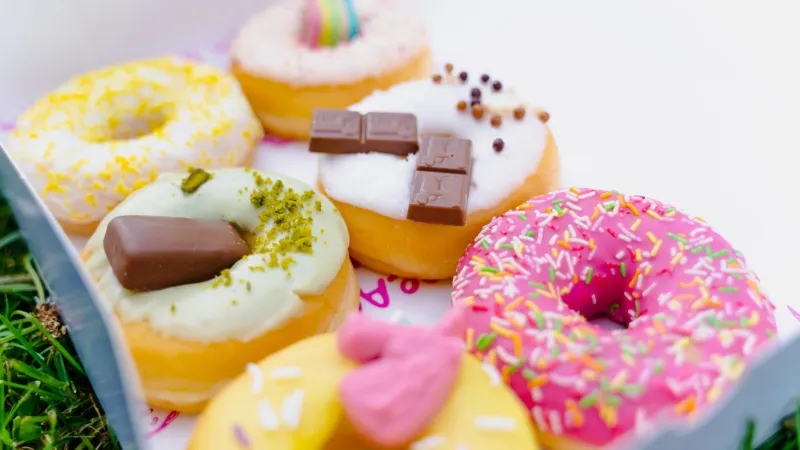
Photo: minimal pastel bakery packaging doughnut display muted colours high street shop, via www.hawtcelebs.com
There is a specific hour of the British afternoon — roughly 3.40pm, the point at which the daylight gives up and the radiator starts making a noise like a disappointed uncle — when a doughnut used to arrive on my phone unbidden. A glossy one. Jam bleeding out of the side. Somebody's hand, always a nice hand, reaching for it.
This January, that hand is gone. The feed is clean. The telly adverts have gone respectable. And yet my phone still knows. It knows I like sprinkles. It knows I waver between custard and jam depending on whether it's raining. It hasn't been told any of this by an advert, because the adverts have, in the technical sense, gone dark.
So let's talk about the great doughnut advertising blackout, and about how a rule change designed to make Britain think less about sugar has mostly made Britain think about sugar in a nicer font.
What Actually Changed, In Plain English
From January, restrictions on advertising less healthy food and drink across TV and paid online spaces have been bedding in, with the doughnut — a product that is essentially a small hat made of sugar — squarely in the crosshairs.
The intent is not mysterious. Cut the volume of the marketing, cut the craving, cut the queue at the counter. It is a sensible-sounding theory that assumes human beings are straightforward machines: input advert, output appetite.
What has actually happened is more interesting. The big spenders didn't stop selling doughnuts. They stopped shouting about them. And the silence, it turns out, has a very specific brand voice: soft-focus, oat-milk-adjacent, faintly apologetic.
The Pastel Pivot
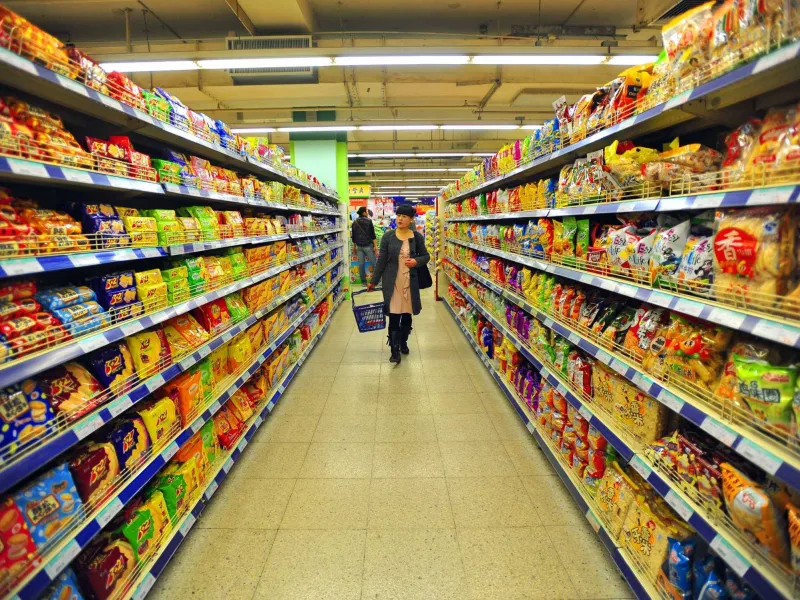
Spend ten minutes in any supermarket bakery aisle this month and you'll notice it. The packaging has gone muted — sage greens, dusty pinks, the sort of colour palette you'd previously associate with a scented candle called Hearth. Words like indulgent, moment, little and reward are doing a lot of heavy lifting. The word doughnut sometimes doesn't appear at all, replaced by baked ring, which sounds less like a treat and more like something a mechanic would charge you for.
The most telling shift is the language of frequency. Products are no longer for you in general; they are for an occasion, as though a doughnut now requires a small ceremony and possibly a witness. One campaign I saw leaned so hard on the phrase "occasional treat" that it accidentally implied the rest of the range was medicinal.
Is this a health win? Genuinely, and unglamorously, maybe a small one — a slightly quieter environment is a slightly quieter environment. But it's also a masterclass in tone substitution. The sugar is identical. The biscuit is identical. Only the coat has changed, and the coat is beige.
The Loopholes Are Doing All the Work
Here's the bit that actually interests me, and the bit that any media buyer will happily explain to you over a coffee they did not pay for.
The rules target the advertising of specific less healthy products, not the existence of the brand. That distinction is doing the sort of heavy lifting normally reserved for a wedding doughnut wall — spectacularly, and with a faint sense of impending collapse.
So what fills the gap?
Brand-level advertising. A supermarket or bakery can keep itself cheerfully present in the culture without pointing at the doughnut. Family, warmth, football, weather, a nice dog in a coat. You come away remembering the logo and forgetting what the logo sells, which is the entire point of branding and always has been.
User-generated content and creators. A person showing you their breakfast is not, in the eyes of the rulebook, an advert. It is a person showing you their breakfast. That this person has a discount code is, we are told, a coincidence of the highest order.
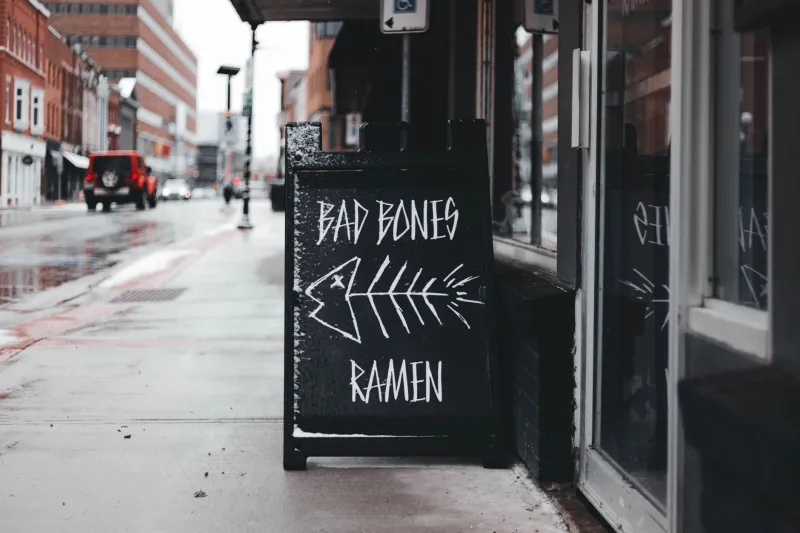
The physical world. Shop windows. Paper bags. The monumental chalkboard outside a bakery that reads FRESH TODAY in a hand so confident it borders on aggressive. Nothing about a doughnut blackout applies to the A-board, and the A-board knows it.
The meal deal. Nobody is being advertised a doughnut when they are advertised lunch. The doughnut simply happens to be in the same plastic box as the sandwich, like a small sweet stowaway. This is the greatest loophole in British retail and nobody talks about it because we're all too busy choosing crisps.
My Phone, Unfortunately
Which brings me back to the 3.40pm problem. If the adverts are dark, why does my phone still collate my weaknesses with the precision of a biographer?
Because the plumbing isn't advertising, it's commerce. Loyalty schemes, delivery apps, order histories, the digital receipt for a box of four I bought in a moment of weakness in February 2024 and have never been allowed to forget. Adverts are the shop shouting. Data is the shop remembering. Only one of those has been asked to keep it down.
So no, the blackout hasn't made me mysterious to the algorithm. It's just made the algorithm subtler. My feed no longer advertises doughnuts; it advertises coffee shops near you, and the coffee shops, bless them, have a bakery counter.
The Verdict: Same Sugar, New Volume
I don't think this is a scandal. Most of what's happening is ordinary marketing doing ordinary marketing things, in a slightly quieter register, with better typography.
But I do think the framing of the whole thing is off. A blackout implies darkness. What we've got is a dimmer switch — turned down just enough that the health people can point at the dial, and just far enough up that nobody in the industry has actually lost anything.
And honestly? The silence is a bit eerie. British food culture runs on noise: the van's generator, the fryer's hiss, the bloke outside the bakery telling you they've sold out of custard. A doughnut that whispers is not a healthier doughnut. It's just a doughnut that's learned to keep its voice down while your phone takes notes.
Occasional treat, my foot. I know a permanent habit when I see one — and it's wearing sage green.