Cold Turkey Glaze: The Afterlife of Britain’s Unsold Christmas Doughnuts
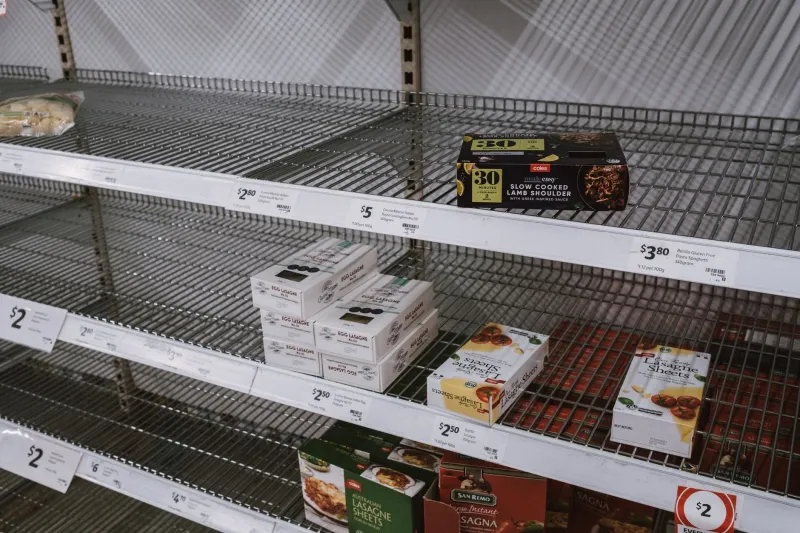
There is a specific smell to a supermarket on Boxing Day morning. It is part stale air, part pine needle, part the faint ghost of a Quality Street wrapper. And somewhere near the bakery aisle, beneath the yellowed strip lights, sits the great festive doughnut clearance: a wall of reduced stickers and clingfilmed rings, each one a small monument to ambition. Britain spent December convincing itself that a mince-pie doughnut was a good idea. Now it must live with the consequences.
As we stare down the barrel of Christmas 2026, the question isn’t whether we’ll do it again — we will, because nothing says “peace and goodwill” like a spiced custard bombe — but what happens to the thousands of unsold festive glazes once the tinsel comes down. Where do they go? And why does the Christmas pudding flavour always look so ashamed of itself?
The Morning After the Glaze Before
I spoke to a bakery manager in Leeds who asked not to be named, partly because she is not authorised to talk to the press and partly because she is still haunted by the Boxing Day 2025 reduced aisle. “We had sixty Christmas pudding doughnuts left,” she said. “Sixty. By 10am they were 90p. By noon they were 40p. By 3pm a man in a dressing gown bought the lot and said he was ‘stocking up for January’. I don’t know what January he meant.”
This is the quiet ritual of the post-Christmas doughnut. Supermarkets slash prices with the enthusiasm of a collapsing soufflé. The big chains — the ones with loyalty apps and a commitment to festive innovation — end up with pallets of cinnamon-swirl rings and gingerbread-stuffed numbers that nobody wants because everyone has eaten their body weight in pigs in blankets. The doughnuts sit there, glistening under plastic, waiting for a Boxing Day walker to make a pity purchase.
The Panic-Pricing Bucket
There is a hierarchy to the reduced doughnut. At the top, mince-pie doughnuts — still vaguely respectable, still able to pass as breakfast. In the middle, the gingerbread ring, which tastes like a candle and is always the last to go. At the bottom, the Christmas pudding doughnut: dense, boozy, strangely brown, and carrying the unmistakable whiff of regret. It is the flavour equivalent of a work colleague telling you their New Year’s resolution in too much detail.
“We don’t mark them down with any dignity,” the Leeds manager admitted. “We just slap a sticker on and hope. Sometimes we put them by the tills. Sometimes we hide them behind the bread. It’s not ethical but it’s not illegal either.”
Food Banks and the Pudding Problem
Here is where it gets complicated. You might assume unsold festive doughnuts go to food banks, and some do — but not as many as you’d think. Doughnuts are fragile, short-dated and notoriously bad at travelling. A food-bank volunteer in Birmingham told me they received a delivery of 200 mince-pie doughnuts on 28 December 2025. “We were grateful,” she said, “but we also had to explain to people why all their food parcels contained pastry. One woman asked if she could swap hers for a tin of beans. I gave her two doughnuts and a tin of beans. She looked at the doughnuts like they’d personally offended her.”
Industry estimates suggest the UK throws away millions of doughnuts each year, though festive ones are hard to track because they disappear into a fog of reduced stickers, staff-room trays and nocturnal bin raids. WRAP has said a lot about food waste generally; it has said less about the specific existential crisis of the Christmas pudding flavour, which is a gap in the literature I am willing to fill.
The Christmas Pudding Flavour: A Confession
Let’s be honest about why so many festive doughnuts don’t sell. Mince-pie doughnuts are a crowd-pleaser. Gingerbread is fine. But the Christmas pudding doughnut was invented by someone who hates joy. It tastes of brandy and obligation. It is the doughnut equivalent of a Boxing Day argument about whether the turkey was dry. When a supermarket marks it down to 20p, nobody feels like they’ve got a bargain — they feel like they’ve been dared.
And yet. There is something noble about the reduced festive doughnut. It is a survivor. It has watched its peers get bought and eaten. It has sat through the tinsel coming down and the last of the Celebrations being picked over. It has seen things. If you buy one on Boxing Day 2026, you are not just buying pastry — you are offering a small act of mercy.
So Is Britain’s Festive Doughnut Boom a Sugar Rush or a Hangover?
Mostly a hangover, but with a sugar rush the night before. The boom is real: every year we demand more outrageous flavours, more cinnamon, more glitter, more stuffing-themed nonsense. Then Christmas ends and the market collapses, leaving supermarkets to panic-price their remaining stock and bakery staff to invent new ways of avoiding eye contact with a gingerbread ring.
Maybe that’s fine. Maybe the Boxing Day doughnut is not a failure but a tradition — a slightly sad, sticky, reduced-sticker tradition that reminds us that abundance has a shelf life. Next time you see a lone Christmas pudding doughnut in a yellow-stickered bag, take it home. It’s not the most wonderful time of the year anymore. It’s just a doughnut. But it’s yours.