Breakfast Roulette: We Gambled Twelve Mornings on Mystery Doughnut Boxes
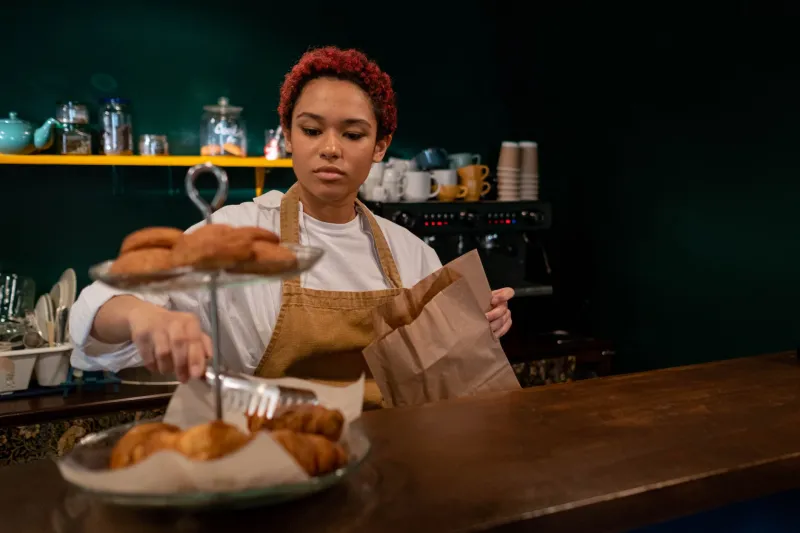
There is a peculiar strain of British hope that arrives at 7:40am on a Tuesday, while you stand in a queue behind a man buying one sausage roll and a scratchcard. It is the hope that the paper bag in your hand contains something you actually wanted.
Increasingly, it doesn't. It contains something. And you paid £5 for the privilege of finding out after the fact.
Mystery doughnut bags — variously branded “surprise boxes”, “baker's picks”, or a shelf with a sad handwritten sign reading LUCKY DIP — have spread across UK bakery counters the way icing spreads across a warm cruller: unstoppably, and slightly beyond the edges. The premise is simple. End-of-shift surplus, bagged blind, sold cheap. The pitch is food waste. The reality is breakfast as a scratchcard, with jam instead of a jackpot.
We spent twelve mornings testing them so that you don't have to. At times it was magnificent. At other times it was a masterclass in grief, conducted in a car park, in the cold.
The Rules of Engagement
Fair testing demands discipline. We set parameters, then broke none of them, which is more than can be said for the bags.
- Five sellers, five archetypes: a Polish bakery in Leeds, a sourdough-first place in Bristol that also inexplicably does doughnuts, a supermarket in-store bakery, a seaside-adjacent café clinging on until March, and a petrol station. The petrol station was for science. The petrol station was a mistake.
- No peeking. No squeezing. No shaking the bag to identify fillings — technically cheating, and also how you end up with custard on your coat sleeve for the rest of the day.
- Blind tasting, outdoors, in a car park. The correct British venue for any serious emotional event.
- Three scoring axes: Value, Thrill and Heartbreak. Heartbreak is scored inversely, because we are not monsters.
What Actually Arrives: A Field Taxonomy
Open enough mystery bags and patterns emerge. Every box is built from the same five recurring characters.
The Ring of Certainty. A plain glazed ring. The bass note, the filler track, the doughnut equivalent of a beige carpet. Never exciting, never offensive, always present.
The Filled Ambush. No external marking, no warning, no mercy. You bite in expecting nothing and receive a mouthful of something aggressively purple.
The Novelty Offcut. Shaped like a star, dusted in glitter, probably made for a gender-reveal party in 2023 and never sold. Suspicious.
The Lonely Vegan. Slightly denser, slightly darker, sitting at the edge of the bag like the new kid at school.
The Feral Child. Three toppings colliding on one doughnut, clearly the result of a tray-level accident. Occasionally the best thing in the bag. Occasionally not.
The Heartbreak Round
Here is the moment nobody warns you about. You bite into a doughnut you would never, in a thousand years and with a full wallet, have chosen for yourself.
And it's not bad. That's the cruelty. It's fine.
Coffee and walnut. Marzipan. Aniseed. Something pink that tastes like a memory of a school disco you didn't enjoy at the time. The bag has handed you somebody else's favourite and asked you to be grateful about it, and Britishness — that beautiful, repressed, deeply unhelpful instinct — rises up and says “ooh, lovely” while your soul quietly files a complaint.
Mystery boxes weaponise politeness. That is their true dark power.
The Food-Waste Alibi (Which Is Genuinely Good)
The cynic in us wants to call this a marketing trick wearing a sustainability hat. But the numbers are grim and the logic is sound: UK bakeries bin an enormous volume of perfectly edible product every single week, doughnuts chief among them, because a doughnut has the shelf life of a May bank holiday.
They are, in fact, the ideal surplus product: cheap to make, quick to decline, and still entirely delicious at six in the evening. The blind-bag model — the same psychology that made magic bags and Too Good To Go a national habit — turns a bin liner into a revenue stream. Everyone wins, unless you get marzipan.
Can Britain Handle Chance? A Verdict
We are, as a nation, scratchcard romantics. We will queue in the drizzle for a lottery we have no intention of winning, then complain bitterly when a £5 bag of doughnuts hands us lemon curd instead of chocolate.
Our scores across twelve mornings came out roughly as follows: Thrill 9/10, Control 3/10, Smugness when you get the good one 11/10. The smugness is the real product. Nothing tastes better than the doughnut you won and your friend didn't.
It also reveals characters. Watch a group split a mystery box and you will learn more about your mates than a decade of dinner parties. There is the negotiator, the one who claims the biggest one “for fairness”, and the one who silently takes the good one first and then offers to swap, knowing full well you'll say no, because you're British, and you'd rather die than take it.
Britain can handle doughnut-based chance. Just about. Provided we're allowed to moan about the outcome at length afterwards, which we are, and which we did.
The Scoreboard
- The Leeds Polish Bakery — “The Generous Grandmother.” Plum jam, poppyseed, one unidentified but transcendent. Six doughnuts, £4.50, zero regrets. The benchmark.
- The Supermarket In-Store Bakery — “The Reliable Cousin.” Four identical glazed and two iced. Competent, faintly sad, exactly what you'd expect. £3.
- The Seaside Café — “The Wildcard.” Included a doughnut with a flake in it and one that may have been a choux bun. Chaotic. Unforgettable.
- The Bristol Sourdough Place — “The Lecturer.” £8 for four doughnuts and a card explaining the fermentation. A lecture is not a mystery.
- The Petrol Station — “The Cautionary Tale.” We do not speak of this. The evidence has been eaten. Mostly.
If We Ran the Country
- Print the allergens. Non-negotiable. A blind bag is not an excuse for a dairy-based surprise.
- Declare the count. “Around six” is a gamble too far when there are four of you and one is a toddler.
- Guarantee one hero doughnut per bag. Keep the chaos, but give the people one guaranteed good time.
- Ban marzipan. This is a manifesto we can all get behind.
Doughnut roulette is simultaneously the best £5 you can spend on breakfast and the worst £5 you can spend on your own mood. It is a sugar-fuelled gamble, a small act of environmental virtue, and an emotional rollercoaster with a hole in the middle. Which, frankly, is the most on-brand breakfast we can imagine.